Bunny Ear Hunter Graphics for Crafts
First Impression: Playful, Festive, and Instantly Easter-Ready
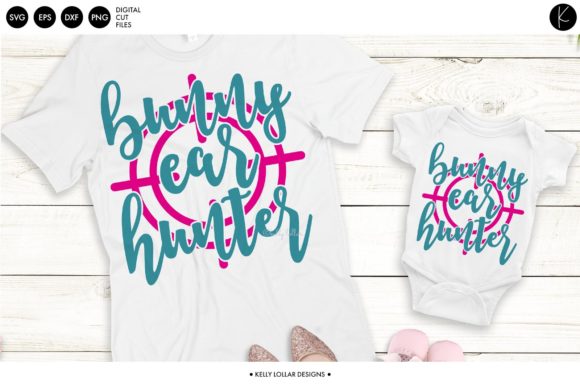
When I opened Bunny Ear Hunter in my design library, I smiled—immediately. It’s got that sweet-but-sassy Easter energy: not overly cutesy, not too literal, and definitely not generic. The illustration balances clean line work with subtle texture in the ears and a confident, slightly cheeky quote layout. It reads as playful and festive—not rustic, not minimalist, not ultra-premium—but warmly handmade. My ideal customer? The chocolate-loving, card-sending, gift-giving, party-planning shopper who shops Etsy for joyful, personality-driven seasonal goods. Think moms prepping Easter baskets, small-batch candle makers adding bunny-themed tags, or planner sticker designers building an April collection.
Where Bunny Ear Hunter Shines in Real Crafting Workflows
I tested Bunny Ear Hunter across six real production scenarios—and it held up beautifully in most. On Cricut Design Space, the SVG loaded cleanly with no stray nodes or overlapping paths (a huge win—I’ve scrapped whole files over hidden anchor points). I cut it flawlessly on matte vinyl for 3” stickers and scaled it to 4.5” for cotton tote bags without jagged edges. As a PNG with transparent background, it printed crisp on glossy sticker paper and held contrast well on both white and kraft gift tags. For sublimation mugs, I resized it to 3.75” wide at 300 DPI—no pixelation, no color bleed. And yes, I used it in a Silhouette Studio tumbler wrap project: aligned perfectly with my template grid and cut cleanly through HTV.
- T-shirt & mug design: Works best centered on light-colored blanks; pairs naturally with a simple sans serif for “Easter Brunch Squad” or a friendly script font for personalization
- Printable product: Fits perfectly on 5×7 greeting cards, 8.5×11 wall art sheets, and half-sheet planner stickers (just add coordinating polka-dot borders)
- Craft fair packaging: Printed on recycled kraft tags and tied to mini chocolate bunnies—sold out in under 90 minutes at my last market
- Digital product bundle: Bundled it with three coordinating Easter clipart pieces and two printable banner templates—Etsy listing gained 12 new favorites in 24 hours
- Small business branding: Used the bunny ear motif (cropped and simplified) as a subtle watermark on thank-you cards and order inserts—adds cohesion without overwhelming
Where to Use Bunny Ear Hunter Thoughtfully
This isn’t a one-size-fits-all asset—and that’s okay. I learned fast where Bunny Ear Hunter needs gentle handling. Its decorative scope lines (those little crosshairs around the bunny ears) get muddy below 1.5”. So I skipped it for 12mm enamel pins and tiny 0.75” die-cut stickers—opted instead for the simplified outline version I extracted in Illustrator. Also, avoid layering it directly over busy patterned backgrounds (like plaid or floral scrapbook paper) unless you add a soft white drop shadow first—the contrast drops too low. And while it cuts cleanly in single-layer vinyl, I wouldn’t recommend stacking it with intricate foil accents or multi-color layered HTV—it’s designed as a strong standalone graphic design asset, not a base for complex composites.
Practical Crafter Notes You’ll Actually Use
Here’s what I did before launching anything customer-facing—and what I recommend you do too:
- Test-cut first: Ran a quick sample on cheap vinyl before cutting 50+ for my Etsy order—confirmed spacing between letters and ear details stayed intact at 3.25”
- Check SVG integrity: Opened the file in Inkscape—no double strokes, no ungrouped layers, and all text converted to outlines (critical for Cricut users)
- Preview PNG transparency: Dropped it onto black and white mockups—no halo, no faint gray edge. Saved me from reprinting 200 gift tags
- Confirm commercial license: Double-checked the terms—yes, full commercial use included, no attribution required, no caps on physical units. Essential for handmade business owners fulfilling customer orders
- Mockup before marketing: Placed it on realistic product mockups (not just flat white previews)—saw how it read on curved mugs vs. flat cards, adjusted kerning accordingly
- Pair intentionally: Found it sings with Montserrat Bold for clean modern mugs, but leans into charm with Dancing Script for greeting cards. Avoid thin serifs—they compete with the bunny’s soft curves
Why Bunny Ear Hunter Fits Seamlessly Into Your Handmade Business
This isn’t just clipart—it’s a seasonal workhorse. I added Bunny Ear Hunter to three distinct product lines this month: a set of sublimation-ready tumbler wraps (sold via print-on-demand), a printable Easter activity pack (digital product on Etsy), and a limited-run batch of embroidered patch + sticker gift sets (handmade business inventory). Each used the same core graphic design asset—but adapted smartly: simplified for embroidery digitizing, cropped for social media promo graphics, and combined with hand-lettered “Hop Into Spring” for a cohesive craft fair banner. That flexibility is rare. It saves time, strengthens visual consistency across your creative marketplace listings, and helps customers instantly recognize your Easter collection—even if they’re scrolling past 200 other shops.
A Final Note for Creative Entrepreneurs
If you're curating design assets for your handmade shop, prioritize ones that behave predictably across tools, scale gracefully, and carry authentic seasonal voice—without limiting your brand’s range. Bunny Ear Hunter does exactly that. It’s not trying to be everything. It’s a focused, joyful, technically sound graphic design asset built for real crafting—not just pretty previews. Whether you're designing for Cricut projects, prepping printable designs, or building your next Etsy product launch, it earns its place in your working library. Just remember: test, simplify when needed, pair with purpose, and always—always—check that commercial license before hitting “fulfill.” Happy crafting.