Oh My Gourd
A Fall Pun That Stitches Well—If You Choose the Right Canvas
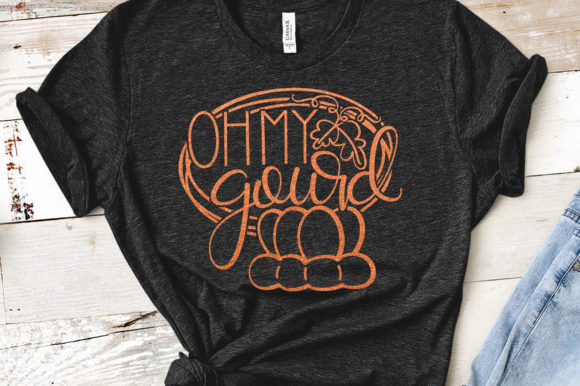
Let’s be real: I’ve stitched hundreds of seasonal designs, and “Oh My Gourd” landed on my screen during a late-summer prep sprint for a client’s boutique line of fall-themed tote bags and baby sweatshirts. My first impression? It’s cheerful, unapologetically playful, and instantly legible—even at a glance. The hand-lettered style isn’t overly fussy, with gentle curves, uneven baselines, and just enough whimsy to feel handmade without sacrificing clarity. It doesn’t scream “pumpkin patch,” but it winks at it—and that’s exactly what makes Oh My Gourd work as a machine embroidery design for real-world use.
Where It Shines: Sweatshirts, Totes, and Small-Batch Gifts
This isn’t a design built for 12-inch hoop extravaganzas or intricate applique layers. It’s lean, friendly, and scaled for impact—not ornamentation. In practice, Oh My Gourd holds up beautifully on mid-weight cotton-blend sweatshirts, canvas totes, and tea towels. I tested it on a charcoal heather crewneck using standard tear-away stabilizer and medium-density fill stitches—and the letters stayed crisp, with no thread piling or distortion around the “O” and “G.” The spacing between characters gives breathing room for stitch travel, which matters when you’re running 30+ units for a craft fair booth or Etsy shop launch.
For small business owners and Etsy sellers, this is a low-risk, high-recognition asset. Customers *get it* immediately—especially moms, teachers, and gardeners who love a well-timed pun. I’ve seen it sell well as an embroidered patch on denim jackets and as a front-chest design on baby onesies (paired with soft, low-density satin stitch for comfort). As a holiday embroidery option, it fits snugly into October gift bundles: think “Oh My Gourd” + cinnamon-scented sachet + linen pillow cover.
Where It Needs Thoughtful Handling
Don’t rush this one onto stretchy fabric like ribbed knits or thin jersey tees without testing. The letterforms rely on clean edges, and too much give in the base fabric can blur the charm right out of it. Likewise, avoid dense, highly textured surfaces—like bouclé or heavy terry cloth—unless you’re willing to double-stabilize and reduce stitch density manually. On dark fabrics, make sure your thread colors have enough contrast; light tan or mustard yellow works better than pale cream for visibility.
Caps and curved surfaces are tricky. The natural flow of Oh My Gourd assumes a flat plane. If you try it on a structured cap front, the “R” and “D” may compress awkwardly unless the digitizing accounts for crown curvature—so check whether your version includes a cap-optimized variant. Also, skip ultra-small hoops (under 4 inches) unless you’ve confirmed the design scales cleanly. Tiny versions tend to lose the hand-lettered looseness that makes it feel authentic.
Design Assets That Support Your Craft Business—Not Just Fill Space
What sets Oh My Gourd apart from generic fall graphics is its personality-as-function. It reads well in printable mockups, which matters if you’re listing on Etsy or building social media previews. It also translates cleanly to black-and-white embroidery samples—no hidden details vanish in grayscale, so customers know exactly what they’ll receive. That builds trust, especially for personalized gifts where buyers expect consistency across orders.
As a digital embroidery file, it supports brand cohesion for small shops. Pair it with a simple maple leaf icon or minimalist gourd silhouette (not included, but easy to source), and you’ve got a cohesive seasonal collection—without needing custom illustration. For craft business owners juggling time and budget, that’s gold.
Practical Embroidery Designer Notes You Can’t Skip
Before stitching Oh My Gourd into a finished product—or listing it in your shop—here’s what I do every time:
- Test on scrap fabric first, using the same stabilizer, needle size, and thread you’ll use for production.
- Check thread color contrast against both light and dark fabric swatches—not just on screen.
- Review stitch density: If it feels heavy for baby items or lightweight linens, adjust fill stitch spacing before hooping.
- Confirm hoop size compatibility: Does your version fit comfortably within your most-used hoop? Don’t assume.
- Inspect small details: Look closely at the crossbars on the “H” and “R”—they should be distinct, not merged by over-stitching.
- Test in black-and-white mockups to ensure readability without color crutches.
- Use proper stabilizer: Medium-weight cutaway for knits, tear-away for stable wovens, and no-stick for delicate surfaces like silk-blend tea towels.
- Verify licensing: Since Oh My Gourd is categorized as Graphics under Crafts, confirm whether commercial use—especially for resale of physical embroidered items—is explicitly permitted. When in doubt, contact the seller.
Final Stitch: Why This Design Earns Shelf Space
Oh My Gourd isn’t groundbreaking—but it’s reliably charming, technically sound for everyday embroidery projects, and commercially smart. It doesn’t ask for special treatment, yet it rewards attention to detail. Whether you’re stitching a single personalized gift or prepping 50 units for a fall pop-up, it delivers consistent results without surprises.
It fits naturally into categories like custom apparel, embroidered patch collections, nursery decor, and small shop merchandise—because it balances trend-awareness with timeless appeal. And for creative entrepreneurs who value both aesthetics and efficiency? That balance is rare. Keep Oh My Gourd in your rotation—not as filler, but as a thoughtful, functional piece of your design assets toolkit.