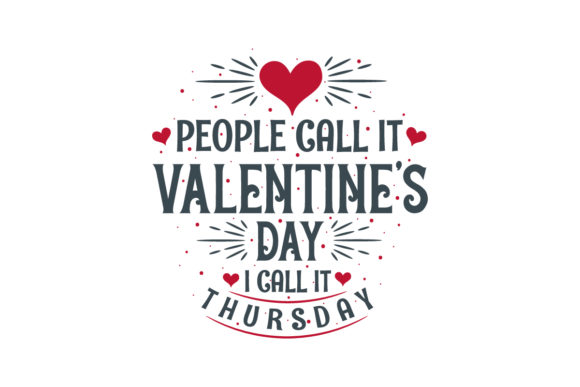
People Call It Valentine’s Day: Graphics & Crafts
As a brand designer and content marketer, I often seek out graphic design assets that can elevate a campaign without overwhelming it. People Call It Valentine’s Day is one such creative design that offers a unique tone for branding and marketing. With its playful yet professional vibe, this Valentine’s Day quote design for single individuals has the potential to fit into a wide range of visual projects.
The First Impression: A Playful Yet Professional Mood
People Call It Valentine’s Day immediately sets a tone that’s both lighthearted and polished. The phrase “I call it Thursday” adds a touch of humor, making it ideal for brands that want to connect with an audience that values individuality and self-expression. This design asset works well in casual branding, handmade products, lifestyle content, and even editorial graphics. Its mood isn’t too serious, but it doesn’t feel unprofessional either.
For small business branding, this design could be used as a subtle nod to the holiday while maintaining a sense of independence. It’s perfect for businesses targeting singles, independent thinkers, or those who prefer to avoid traditional romantic messaging.
Real-World Applications: From Social Media to Packaging
People Call It Valentine’s Day can be integrated into various marketing visuals. Whether you’re designing social media graphics, Instagram posts, or Facebook ads, this digital product provides a consistent and eye-catching element. Its versatility makes it a great addition to a design bundle, especially for content creators looking to add personality to their work.
In packaging design, this asset could serve as a background or accent on product labels. For example, a boutique coffee shop might use it on a Valentine’s Day-themed bag or a printable design for a customer loyalty card. The SVG design and PNG transparent options make it easy to scale and adapt for different uses.
When used in editorial design, like blog graphics or website headers, People Call It Valentine’s Day adds a unique flair without distracting from the main message. It also pairs well with different font styles, making it adaptable for both modern design and more traditional layouts.
Supporting Marketing Goals: Clarity, Consistency, and Connection
This design asset supports several key marketing goals. It helps create a stronger first impression by offering a visually appealing and memorable element. When used in a campaign, it contributes to a clearer visual hierarchy, ensuring that the message remains the focus while still being engaging.
For small business branding, People Call It Valentine’s Day can help build audience trust through consistent visual elements. Its clean lines and simple composition make it suitable for a variety of platforms, from Canva templates to digital ads. It also encourages emotional connection, which is essential for content marketing and lead magnets.
When used in a content kit or promotional banner, this design asset enhances the professional appearance of a campaign. It’s especially useful for brands that want to stand out in crowded markets without appearing cluttered or unorganized.
Where It Shines: Hero Graphics and Branding Elements
People Call It Valentine’s Day excels in hero graphics and campaign headers. These are the first elements users see, so having a strong visual that aligns with your brand’s identity is crucial. This design fits well in branded templates, social media covers, and packaging accents, helping to reinforce brand recognition across multiple channels.
It also works well in content bundles and promotional banners. For instance, a digital seller might include this design in a downloadable file for a Valentine’s Day marketing toolkit. The availability of multiple formats—AI, EPS, PDF, SVG, DXF, PNG transparent, and JPEG—makes it easy to integrate into different workflows.
Where to Use It Carefully: Formal and Text-Heavy Contexts
While People Call It Valentine’s Day is versatile, it may not be the best choice for formal corporate branding or dense information layouts. In these cases, the design could compete with the main message, reducing readability and clarity.
Small mobile graphics and low-contrast backgrounds may also challenge the effectiveness of this design. If the background is too similar to the text or illustration, it could become hard to read. Additionally, overly minimal brands or text-heavy ads might not benefit from this asset, as it could feel out of place or redundant.
Practical Designer Notes: Testing and Compatibility
Before using People Call It Valentine’s Day in a campaign, test it with your brand color palette. Ensure that the two colors included work well with your existing scheme. Also, check how it looks in black and white, as some applications may require grayscale versions.
Place it inside real campaign mockups to see how it interacts with other elements. Preview it on mobile screens to confirm that it remains legible and visually appealing. Compare it against competitor visuals to ensure it stands out in a positive way.
Review how it pairs with different font styles. Whether you're using a serif, sans serif, script, handwritten, or display font, the design should complement rather than clash. Check spacing and balance to maintain a cohesive look across all materials.
Finally, always confirm commercial licensing before using this design in paid campaigns, client work, or business branding. This ensures that you’re fully compliant and can use the asset without legal issues.
Conclusion: A Versatile Asset for Creative Marketers
People Call It Valentine’s Day is more than just a holiday design—it’s a flexible tool for creative marketers, small business owners, and brand designers. Whether you're building a content kit, refreshing social media visuals, or creating a digital ad, this graphic design asset offers a unique and effective way to engage your audience.
Its ability to blend humor with professionalism makes it ideal for brands that want to stand out while maintaining a level of sophistication. By understanding where it works best and where to use it carefully, you can maximize its impact in your next campaign.